A good night’s sleep is the cornerstone of overall well-being, and the right pillow plays a pivotal role in achieving it. When it comes to natural fills, feather and down are two popular choices that often leave consumers wondering about their distinctions in quality and performance. While both originate from ducks or geese, they offer vastly different sleep experiences. Understanding the nuances between feather and down will empower you to select a bed pillow that truly enhances your sleep quality and provides optimal comfort.
Understanding Feather and Down: A Core Distinction
Feather and down fills are renowned for their natural comfort and luxurious feel, but they are not interchangeable. These materials, harvested from waterfowl, possess unique structures that dictate their individual characteristics in a bed pillow. Recognizing these fundamental differences is the first step toward making an informed choice.
Feathers come from the outer protective layer of ducks and geese, typically found on their wings and backs. These are the familiar, flat structures with a central quill or spine. Their inherent rigidity and flatness are key to their specific properties when used as a pillow fill. Down, on the other hand, is the soft, fluffy insulating layer found underneath the tougher exterior feathers, usually on the bird’s chest and underbelly. Down clusters are three-dimensional and spherical, lacking quills, and are prized for their exceptional softness and ability to trap air, which provides warmth and loft.
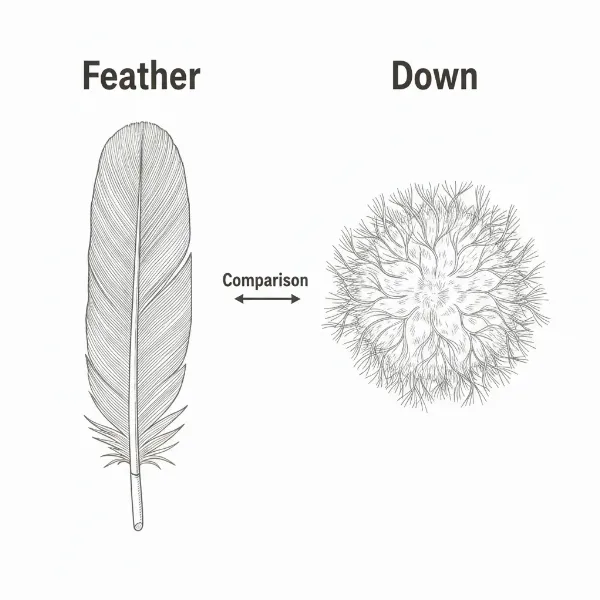 Visual comparison of a flat feather with a central quill and a fluffy, spherical down cluster.
The Unique Characteristics of Feather Fill
Feather pillows are often appreciated for their distinct feel and robust support, making them a suitable option for many sleepers. They are generally more accessible in terms of price compared to their down counterparts, offering a firm yet moldable sleeping surface.
Feather Fill: Pros and Cons
|
Our Picks for the Best Bed pillows in 2026
As an Amazon Associate I earn from qualifying purchases.
|
||
| Num | Product | Action |
|---|---|---|
| 1 | Amazon Basics Down Alternative Pillow for Back Side Sleepers, Medium Density, Standard Size, 26" x 20", 2-Pack, White |

|
| 2 | Utopia Bedding Bed Pillows for Sleeping Queen Size (Blue), Set of 2, Soft & Fluffy Pillow with Down Alternative Filling, Cooling, Hotel Quality, Gusseted Pillow for Back, Stomach or Side Sleepers |
|
| 3 | Beckham Hotel Collection Bed Pillows Standard/Queen Size Set of 2 - Original Soft Down Alternative Pillow for Sleeping - Soft Support for Back, Stomach or Side Sleepers |
|
| 4 | Utopia Bedding Bed Pillows for Sleeping Queen Size (Grey), Set of 2, Soft & Fluffy Pillow with Down Alternative Filling, Cooling, Hotel Quality, Gusseted Pillow for Back, Stomach or Side Sleepers |
|
| 5 | Goose Feather Down Pillow Queen Size Set of 2, Hotel Collection Bed Pillows for Sleeping, 2 Pack, Down Surrounded Soft Medium Firm Pillows for Side Back Sleepers 20 x 30 in. |
|
| 6 | Utopia Bedding Bed Pillows for Sleeping Queen Size (Black), Set of 2, Soft & Fluffy Pillow with Down Alternative Filling, Cooling, Hotel Quality, Gusseted Pillow for Back, Stomach or Side Sleepers |
|
| 7 | Amazon Basics Down-Alternative Pillows for Stomach and Back Sleepers, Soft Density, 20 x 36 inches, 2-Pack, White |
|
| 8 | Amazon Basics Down Alternative Pillows for Stomach and Back Sleepers, Soft Density, Standard, Pack of 2, White, 26 in L x 20 in W |
|
| 9 | Utopia Bedding Bed Pillows for Sleeping Queen Size (White), Set of 2, Soft & Fluffy Pillow with Down Alternative Filling, Cooling, Hotel Quality, Gusseted Pillow for Back, Stomach or Side Sleepers |
|
| 10 | Utopia Bedding Bed Pillows for Sleeping Queen Size (Navy/White), Set of 2, Cooling Hotel Quality, Gusseted Pillow for Back, Stomach or Side Sleepers |
|
Feather pillows offer a firmer, more substantial feel due to the quills in each feather. They provide excellent support, especially for those who need a higher loft that doesn’t collapse easily. The natural structure of feathers allows them to be compressed and re-fluffed, offering adaptable support. From a cost perspective, feather pillows are typically more budget-friendly. However, the presence of quills means that feathers can occasionally poke through the pillow fabric, potentially causing discomfort. They tend to be less insulating than down and may flatten more readily over time, requiring frequent fluffing to maintain their shape and loft. Some users also report a subtle rustling sound with feather pillows. These characteristics make feather pillows ideal for back and side sleepers who require robust neck and shoulder support and appreciate a firmer sleeping surface without a significant investment.
The Luxurious Qualities of Down Fill
Down pillows are synonymous with luxury and cloud-like softness, offering a plush and lightweight feel that many sleepers adore. They are highly sought after for their exceptional comfort and insulating properties.
Down Fill: Pros and Cons
Down pillows are celebrated for their unparalleled softness, lightweight nature, and superior insulation. The spherical down clusters create tiny air pockets, providing excellent loft and warmth without significant weight. They conform exquisitely to the head and neck, offering gentle, resilient support that quickly springs back into shape. This makes them incredibly comfortable for those who prefer a softer, more enveloping pillow. However, down pillows come at a higher price point due to the smaller yield of down per bird and the intricate processing. While supremely soft, pure down pillows might offer less firm support than feather pillows, which could be a consideration for those requiring more structural neck support. Some individuals may also have allergies to down, though many modern down pillows are processed to be hypoallergenic. Down pillows are often preferred by stomach sleepers due to their soft, malleable nature that prevents excessive neck extension, and by anyone seeking a truly luxurious and soft sleep experience.
Feather vs. Down: A Direct Quality Comparison
When evaluating feather and down, their “quality” isn’t a simple matter of one being inherently superior, but rather how well their characteristics align with individual preferences and needs. Here’s a detailed comparison:
| Feature | Feather Pillow | Down Pillow |
|---|---|---|
| Material Source | Outer layers, wings, and back feathers of birds | Undercoating, chest, and underbelly clusters of birds |
| Structure | Flat with a central quill (spine) | Fluffy, spherical clusters without quills |
| Loft/Fill Power | Lower loft, can flatten easily | High loft, excellent resilience and bounce (fill power) |
| Firmness/Support | Firmer, more rigid support | Softer, more malleable, cloud-like support |
| Warmth/Insulation | Less insulating, can feel cooler | Excellent insulator, traps body heat effectively |
| Weight | Heavier due to quills and structure | Lighter, airy feel |
| Durability | Good, but may break down and poke over time | Very durable, retains loft and shape for years |
| Price | More affordable | Higher premium price |
| Noise | Can produce a subtle rustling sound | Generally quiet |
| Hypoallergenic Potential | Higher potential for allergens; quills can irritate | Often processed to be hypoallergenic; less irritant |
| Best Use | Back/side sleepers needing firm support; budget-conscious | Stomach sleepers; those preferring softness and luxury |
Choosing Your Ideal Bed Pillow: Beyond Feather and Down
Selecting the perfect bed pillow goes beyond merely understanding the differences between feather and down; it involves matching these characteristics to your unique sleeping style, health considerations, and personal preferences. The best choice is the one that provides optimal alignment and comfort for you.
Considering Your Sleep Position
Your preferred sleep position is a crucial factor. Side and back sleepers generally require more support to maintain spinal alignment. A firmer feather pillow or a down-feather blend can provide the necessary elevation and resistance to keep the head and neck aligned with the spine. Stomach sleepers, on the other hand, benefit from a softer, more compressible pillow like pure down, which allows the head to sink in without tilting the neck too far upwards, preventing strain. The goal is to find a pillow that fills the gap between your head and the mattress without creating an awkward angle.
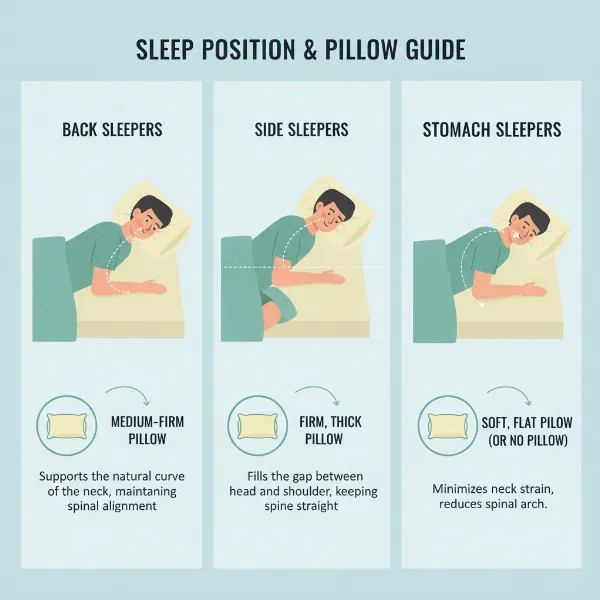 Illustrations of back, side, and stomach sleepers with recommended pillow types for each position.
Allergy Concerns and Fill Power
For individuals prone to allergies, the choice between feather and down requires careful consideration. While both are natural animal products, many modern down and feather pillows undergo rigorous cleaning processes to remove potential allergens, making them hypoallergenic. Always look for certifications. When it comes to down, “fill power” is a key indicator of quality. Fill power measures the volume one ounce of down occupies, with higher numbers indicating larger, fluffier, and more insulating down clusters. A higher fill power generally translates to a softer, lighter, and more durable pillow that holds its loft better.
Budget and Longevity
The investment in a pillow is also a factor. Feather pillows are typically more economical, offering a good balance of support and comfort at a lower price point. They can last for several years with proper care. Down pillows, while a more significant upfront investment, often boast superior longevity and can maintain their luxurious feel and loft for five years or even longer with diligent maintenance. Consider the long-term value: a more expensive down pillow might offer a better cost-per-night over its extended lifespan.
Caring for Your Feather and Down Pillows
Proper care and maintenance are essential for maximizing the lifespan and preserving the quality of your feather and down pillows. Regular attention ensures they remain supportive, comfortable, and hygienic for years to come.
To keep your pillows fresh and fluffy, frequent fluffing is key. Daily fluffing helps redistribute the fill and restore loft. Most feather and down pillows can be machine washed, but it’s crucial to follow the manufacturer’s instructions carefully. Use a mild detergent and wash on a gentle cycle with cold water. It’s often recommended to wash two pillows at a time to balance the washing machine. For drying, use a low heat setting and include a few dryer balls to help break up clumps and restore fluffiness. Ensure the pillows are completely dry before use to prevent mildew. Airing them out periodically in fresh air can also help keep them refreshed.
Conclusion
Choosing between feather and down for your bed pillow ultimately comes down to personal preference, balancing desired softness, support, budget, and potential allergies. Down offers a luxurious, soft, and lightweight experience with superior insulation and longevity, making it ideal for those who prioritize plush comfort and gentle support, particularly stomach sleepers. Feather pillows, while firmer and more robust due to their quills, provide excellent structural support at a more accessible price point, often favored by back and side sleepers. Both options, when chosen thoughtfully and cared for properly, can significantly contribute to a restful night’s sleep. By understanding their distinct qualities, you are now equipped to select the perfect natural fill pillow to elevate your sleep sanctuary. Which fill will guide you to your deepest dreams?
Frequently Asked Questions
Is down better than feather for pillows?
“Better” is subjective; down is softer, lighter, and more insulating, offering a luxurious, cloud-like feel. Feathers provide firmer support and are more budget-friendly. Your ideal choice depends on your sleep position and preference for softness versus firmness.
What is a down-feather blend pillow?
A down-feather blend pillow combines the best of both worlds, featuring a mix of down clusters and feathers. This blend typically offers a good balance of soft comfort from the down and firm support from the feathers, often at a more moderate price point than pure down.
Do feather pillows lose feathers?
Feather pillows can occasionally lose feathers, especially if the pillow casing is not tightly woven. The quills can sometimes work their way through the fabric. Choosing a pillow with a high-quality, down-proof fabric cover can help minimize this issue.
Are feather pillows noisy?
Feather pillows can sometimes produce a subtle rustling sound when moved or fluffed due to the quills rubbing against each other. This is generally more noticeable than with pure down pillows, which are typically very quiet.
How long do feather and down pillows last?
With proper care, a high-quality down pillow can last 5-10 years or even longer, maintaining its loft and support. Feather pillows typically last 2-5 years, though their firmness may decrease over time, requiring more frequent fluffing or replacement.