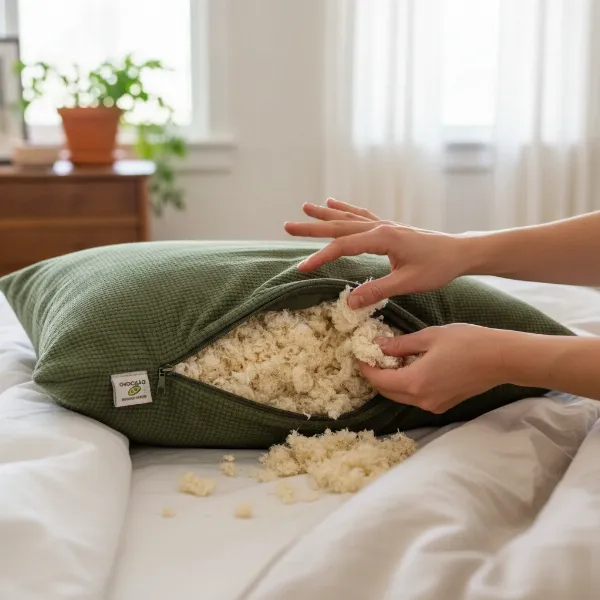
Do you ever find your freshly washed pillows emerge from the dryer lumpy, flat, or still carrying a hint of dampness? Achieving that perfectly fluffy, truly dry pillow after a wash can feel like a laundry enigma. Yet, proper drying techniques are not just about aesthetics; they are crucial for hygiene, comfort, and extending the lifespan of your cherished bed pillows. This comprehensive guide will illuminate the path to perfectly fluffed pillows, unveiling the secrets of effective dryer use, including the ingenious “tennis ball trick,” to transform your sleep experience.
Bed Pillows: An Overview and Their Importance
Bed pillows are more than just soft headrests; they are vital components of a healthy sleep environment. They provide essential support, aligning your head, neck, and spine, which can significantly impact your sleep quality and overall well-being. A good pillow can alleviate common issues like neck stiffness, shoulder pain, and even headaches, contributing to deeper, more restorative sleep.
The market offers a diverse range of bed pillows, each with unique characteristics and care requirements. Understanding these differences is key to proper maintenance. Whether your preference leans towards the cloud-like embrace of down, the firm support of memory foam, or the hypoallergenic properties of synthetic fills, knowing how to care for them ensures they continue to deliver the comfort and support you rely on night after night.
Common Bed Pillow Types and Their Dryer Compatibility
Not all pillows are created equal when it comes to dryer compatibility. Always consult your pillow’s care label first, as it provides the most accurate instructions for its specific materials.
Down and Feather Pillows
- Pros: Exceptionally soft, moldable, breathable, and long-lasting with proper care.
- Cons: Can be expensive, may trigger allergies in some individuals, and require careful drying to prevent clumping.
- Dryer Suitability: Generally dryer-safe on a low heat or air fluff setting. High heat can damage the delicate feathers and down, making them brittle and less resilient. They tend to clump, making the tennis ball trick particularly beneficial.
|
Our Picks for the Best Bed pillows in 2026
As an Amazon Associate I earn from qualifying purchases.
|
||
| Num | Product | Action |
|---|---|---|
| 1 | Utopia Bedding Bed Pillows for Sleeping Queen Size (Blue), Set of 2, Soft & Fluffy Pillow with Down Alternative Filling, Cooling, Hotel Quality, Gusseted Pillow for Back, Stomach or Side Sleepers |

|
| 2 | Utopia Bedding Bed Pillows for Sleeping Queen Size (Black), Set of 2, Soft & Fluffy Pillow with Down Alternative Filling, Cooling, Hotel Quality, Gusseted Pillow for Back, Stomach or Side Sleepers |
|
| 3 | Amazon Basics Down-Alternative Pillows for Stomach and Back Sleepers, Soft Density, 20 x 36 inches, 2-Pack, White |
|
| 4 | Utopia Bedding Bed Pillows for Sleeping Queen Size (White), Set of 2, Soft & Fluffy Pillow with Down Alternative Filling, Cooling, Hotel Quality, Gusseted Pillow for Back, Stomach or Side Sleepers |
|
| 5 | Amazon Basics Down Alternative Pillows for Stomach and Back Sleepers, Soft Density, Standard, Pack of 2, White, 26 in L x 20 in W |
|
| 6 | Goose Feather Down Pillow Queen Size Set of 2, Hotel Collection Bed Pillows for Sleeping, 2 Pack, Down Surrounded Soft Medium Firm Pillows for Side Back Sleepers 20 x 30 in. |
|
| 7 | Beckham Hotel Collection Bed Pillows Standard/Queen Size Set of 2 - Original Soft Down Alternative Pillow for Sleeping - Soft Support for Back, Stomach or Side Sleepers |
|
| 8 | Utopia Bedding Bed Pillows for Sleeping Queen Size (Navy/White), Set of 2, Cooling Hotel Quality, Gusseted Pillow for Back, Stomach or Side Sleepers |
|
| 9 | Amazon Basics Down Alternative Pillow for Back Side Sleepers, Medium Density, Standard Size, 26" x 20", 2-Pack, White |
|
| 10 | Utopia Bedding Bed Pillows for Sleeping Queen Size (Grey), Set of 2, Soft & Fluffy Pillow with Down Alternative Filling, Cooling, Hotel Quality, Gusseted Pillow for Back, Stomach or Side Sleepers |
|
Down Alternative and Polyester Pillows
- Pros: Hypoallergenic, affordable, and often machine-washable and dryable. They offer a plush feel similar to down.
- Cons: Can flatten over time, may retain heat more than natural fills, and can develop lumps if not dried correctly.
- Dryer Suitability: Most down alternative and polyester pillows can be safely dried in a dryer on a low heat setting. The tennis ball trick is highly recommended to maintain their loft and prevent the synthetic fibers from clumping.
Memory Foam Pillows
- Pros: Contours to your head and neck, offering excellent pressure relief and support, durable.
- Cons: Can retain heat, heavier than other types, and may have an initial off-gassing odor.
- Dryer Suitability: Generally NOT dryer safe. Memory foam is highly sensitive to heat, which can melt, degrade, or even disintegrate the foam structure, rendering the pillow unusable. These pillows should almost always be air-dried flat in a well-ventilated area, away from direct sunlight.
Latex Pillows
- Pros: Naturally hypoallergenic, resistant to dust mites, durable, and provides resilient support.
- Cons: Can be expensive, heavier than other types, and may have a distinct natural rubber smell.
- Dryer Suitability: Generally NOT dryer safe. Similar to memory foam, high heat can cause latex to break down, crumble, or become brittle. It is best to air dry latex pillows on a clean, flat surface, turning periodically to ensure even drying.
Buckwheat Hull Pillows
- Pros: Excellent airflow, customizable firmness, and natural material.
- Cons: Heavier and noisier than other pillows, and the filling cannot be machine washed or dried.
- Dryer Suitability: The buckwheat hulls must be removed before washing the pillow casing. The hulls themselves should never be put in a dryer; they must be air-dried separately to prevent moisture retention and potential mold growth. The empty pillow casing can usually be machine washed and dried according to its label.
The Tennis Ball Trick: How It Works Wonders for Bed Pillows
The “tennis ball trick” is a tried-and-true method that transforms your dryer into a fluffing powerhouse, especially for down, feather, and synthetic-filled bed pillows. But how exactly do these unassuming sports accessories work their magic?
As your wet pillows tumble in the dryer, the filling inside—be it down, feathers, or synthetic fibers—tends to clump together, especially if it’s soaked through. The tennis balls, or an equivalent like wool dryer balls, provide a gentle yet persistent beating action. They bounce around inside the drum, constantly hitting and agitating the pillows. This physical impact helps to break up those stubborn clumps, evenly redistributing the filling throughout the pillow.
This continuous agitation also creates crucial air pockets within the pillow, enhancing airflow. Improved airflow means faster drying times and ensures that moisture doesn’t get trapped deep within the fibers, which is critical for preventing mildew and unpleasant odors. The result? Pillows that are not only thoroughly dry but also wonderfully fluffy, retaining their original loft and shape.
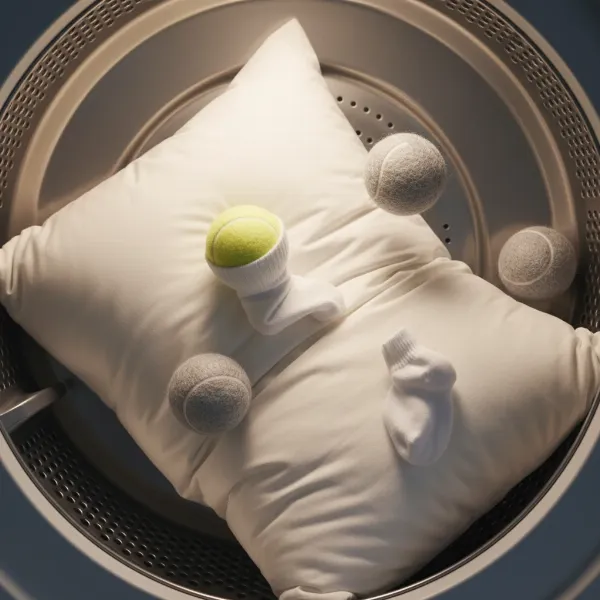 Tennis balls and wool dryer balls fluffing bed pillows in a rotating clothes dryer.
While tennis balls are effective, dedicated wool dryer balls offer a similar benefit without the potential for dye transfer (if un-socked tennis balls are used) or the distinct smell that new tennis balls might have. They also absorb some moisture, further speeding up the drying process.
Step-by-Step Guide: Drying Bed Pillows in the Dryer with Tennis Balls
Ready to give your bed pillows a new lease on life? Follow these simple steps for perfectly dried, fluffy results every time.
Prepare Your Pillows
Before drying, ensure your pillows have been thoroughly washed according to their care instructions. For best results, run an extra spin cycle in your washing machine to extract as much excess water as possible. This significantly reduces drying time and helps prevent clumping. Never put a soaking wet pillow directly into the dryer.
Gather Your Tools
You’ll need two to three clean tennis balls. To prevent any dye transfer from the tennis balls to your pillows, place each tennis ball inside a clean, white sock and tie the end. If you prefer, wool dryer balls are an excellent alternative, offering similar fluffing benefits and often speeding up drying time without any risk of dye issues.
Load the Dryer Correctly
Place one or two pillows in the dryer at a time. Avoid overloading the dryer, as pillows need ample space to tumble freely. Overcrowding will hinder the tennis balls from doing their job effectively and can lead to uneven drying and clumping. Add your sock-covered tennis balls or wool dryer balls into the drum with the pillows.
Select the Right Settings
Choose a low heat or air fluff setting on your dryer. High heat can damage delicate fillings like down and feathers, and can even melt synthetic fibers. A gentle, consistent heat will dry your pillows thoroughly without causing damage. Skip the “auto-dry” setting, as it might only detect surface moisture, leaving the inside damp.
Monitor and Fluff
Pillows can take a surprisingly long time to dry completely. Check on them every 20-30 minutes. Take them out, give them a good manual fluff and pat, and feel for any damp spots. This helps redistribute the filling and expose any lingering moisture to the dryer’s heat. Repeat this process until your pillows feel entirely dry.
Ensure Complete Dryness
This step is critical. Any residual moisture can lead to mildew, odors, and an unhygienic sleeping surface. Even if they feel dry to the touch, they might still be damp deep inside. If possible, after machine drying, let your pillows air out in a well-ventilated area for a few hours, or even briefly in direct sunlight, for added freshness and a final check for dampness.
Essential Considerations for Safe and Effective Pillow Drying
While the tennis ball trick is highly effective, a few key considerations will ensure safety and optimal results.
Always Check the Care Label
This cannot be stressed enough. The care label is your pillow’s instruction manual. It will tell you if your pillow is dryer-safe, what temperature settings to use, and any specific precautions. Ignoring it can lead to permanent damage to your pillow or even your dryer.
Low Heat is Key
For almost all dryer-safe pillows, low heat is the safest and most effective setting. High temperatures can cause irreversible damage:
- Down/Feather: Can scorch or make feathers brittle.
- Synthetics: Can melt or stiffen the fibers, creating irreversible lumps.
- Memory Foam/Latex: As mentioned, these are generally not dryer-safe due to their heat sensitivity.
Don’t Overload the Dryer
Resistance is futile if your pillows don’t have room to tumble. Overloading the dryer prevents proper air circulation and the effective action of the tennis balls, leading to uneven drying, increased drying time, and clumpy filling. When in doubt, dry one pillow at a time.
Beware of Dampness
The hidden enemy of freshly washed pillows is residual moisture. Pillows can feel dry on the outside but still harbor dampness deep within their core. This creates a perfect breeding ground for mold, mildew, and bacteria, leading to unpleasant smells and potential health issues. Always err on the side of caution and extend drying time or add air drying if you suspect any dampness.
Tennis Balls vs. Dryer Balls
Both tennis balls and wool dryer balls serve the same purpose: to agitate and fluff your pillows.
- Tennis Balls: Readily available and inexpensive. Ensure they are clean and covered in socks to prevent dye transfer and possible rubber smell.
- Wool Dryer Balls: Specifically designed for laundry, they absorb moisture, reduce static, and are typically dye-free. They are often considered a more specialized and gentler option. Choose whichever is most convenient and appropriate for your pillows.
Top Tips for Maintaining Fluffy Bed Pillows
Beyond the drying process, consistent care can significantly extend the life and fluffiness of your bed pillows.
- Regular Washing: Aim to wash your pillows every four to six months. This removes accumulated dust mites, sweat, skin cells, and allergens that can weigh down the filling and compromise hygiene.
- Daily Fluffing: A quick fluff each morning helps to redistribute the filling and restore your pillow’s loft. Simply patting and punching your pillow from different sides can make a big difference. Sleep expert Martin Seeley, CEO of MattressNextDay, advises, “When making your bed feel like a five-star hotel, you should also fluff your pillows daily. To do this, you just need to pick it up and hold the left and right sides of the pillow and compress and decompress.”
- Use Pillow Protectors: These zippered covers act as a barrier against moisture, dust mites, and allergens, keeping your actual pillow cleaner for longer and reducing the frequency of deep washing.
Conclusion
Achieving perfectly dry and fluffy bed pillows after washing is not an elusive dream but an attainable reality with the right techniques. By understanding your pillow’s material, opting for low heat settings, and employing the simple yet highly effective tennis ball trick, you can ensure your pillows remain supportive, hygienic, and wonderfully comfortable. Regular maintenance, including daily fluffing and using pillow protectors, further enhances their longevity and keeps them in prime condition. Embrace these practices, and you’ll not only extend the life of your bed pillows but also significantly elevate the quality of your nightly rest. What’s your secret to keeping your bed pillows in pristine condition?
Frequently Asked Questions
Can I put memory foam pillows in the dryer?
No, memory foam pillows should not be put in the dryer. High heat can cause the foam to melt, degrade, or lose its structural integrity. Always air dry memory foam pillows on a clean, flat surface away from direct sunlight.
How many tennis balls should I use to dry a pillow?
For optimal fluffing and drying, use two to three clean tennis balls per pillow. Ensure they are covered in white socks to prevent any dye transfer to your clean pillows.
What if I don’t have tennis balls?
If you don’t have tennis balls, wool dryer balls are an excellent alternative. They perform the same function of agitating the pillows, helping to fluff them and speed up drying time. Some sources also suggest using a pair of clean, white sneakers (without dirt or laces) if you’re in a pinch, though tennis balls or dryer balls are preferred.
How long does it take to dry a pillow in the dryer?
The drying time can vary significantly based on the pillow’s size, filling type, and your dryer’s efficiency. Generally, it takes between 30 to 60 minutes or even longer. It’s crucial to check your pillows every 20-30 minutes, manually fluff them, and continue drying until they are completely moisture-free to prevent mildew.
Why do my pillows clump in the dryer?
Pillows clump in the dryer when their filling (down, feathers, or synthetic fibers) gets wet and sticks together without enough agitation to break it apart. The tennis ball trick (or using dryer balls) combats this by continuously beating and separating the filling as the pillow tumbles, ensuring an even distribution and preventing lumps.