For millions navigating sleep apnea, Continuous Positive Airway Pressure (CPAP) therapy is a life-changer. Yet, finding comfortable sleep, especially as a side sleeper with a mask, can transform this essential treatment into a nightly struggle. Traditional pillows often clash with CPAP masks, leading to frustrating air leaks, uncomfortable pressure points, and disrupted sleep. This article delves into how specialized CPAP pillows address these challenges, guiding you through selecting the ideal pillow to enhance your sleep quality and therapy adherence.
CPAP Pillows: An Overview and Their Benefits
CPAP therapy, while incredibly effective for sleep apnea, introduces a new dimension to bedtime comfort: the mask. Standard pillows can push against the mask, breaking its seal and causing discomfort. CPAP pillows are specifically engineered to accommodate this equipment, ensuring a seamless and restful night.
These innovative pillows are designed with unique contours, cut-outs, and varying lofts to create space for your mask and tubing. This thoughtful design leads to several significant benefits:
- Improved Mask Seal: The primary advantage is maintaining an unbroken mask seal. By providing dedicated space, CPAP pillows prevent mask displacement, minimizing air leaks that can reduce therapy effectiveness and wake you up.
- Enhanced Comfort: Side sleepers often find regular pillows uncomfortable due to the mask digging into their face. CPAP pillows alleviate this pressure, allowing you to sleep on your side naturally and comfortably without facial irritation or red marks.
- Proper Spinal Alignment: Many CPAP pillows offer ergonomic support for your head and neck, crucial for maintaining optimal spinal alignment. This reduces the likelihood of waking with neck or shoulder pain, a common complaint among side sleepers.
- Reduced Facial Marks: Without a specialized pillow, pressure from the mask can leave uncomfortable lines and marks on your face. CPAP pillows mitigate this by cradling your head and mask, distributing pressure more evenly.
- Better Sleep Quality: By addressing mask interference and improving comfort, CPAP pillows contribute to more consistent, uninterrupted sleep, which is vital for both therapy adherence and overall health.
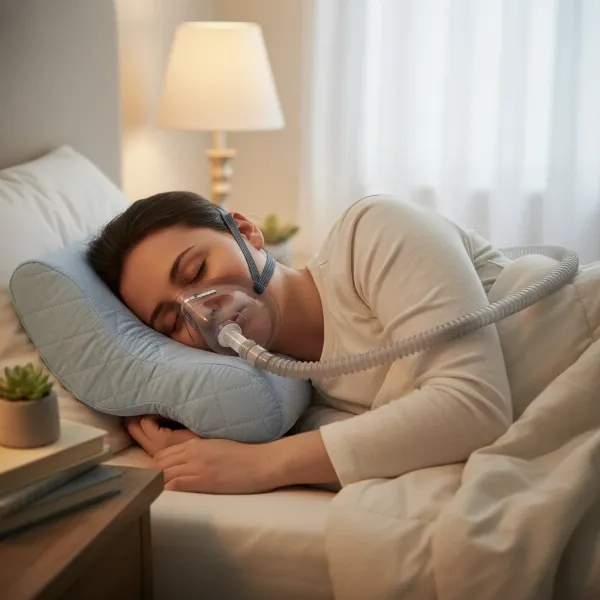 A side sleeper comfortably using a CPAP pillow with a mask, ensuring proper seal and comfort.
Common Types of CPAP Pillows
When exploring CPAP pillows, you’ll find various designs tailored to specific needs. These aren’t typically categorized by traditional materials like down or cotton but by their functional features that address CPAP therapy challenges.
Contoured CPAP Pillows
These are the most recognizable type, featuring distinct shapes designed to interact with your CPAP mask and tubing. They often have:
- Unique Cut-outs and Indentations: These strategic depressions on the sides or corners of the pillow create pockets where your mask and tubing can rest without being compressed or dislodged.
- Ergonomic Curves: Many contoured pillows are shaped to cradle your head and neck, promoting natural spinal alignment while ensuring the mask remains unimpeded.
- Benefits: Contoured pillows are excellent for preventing mask leaks and pressure points. They are particularly beneficial for full-face masks, which require more clearance, but also work well with nasal and nasal pillow masks. The design helps stabilize the mask, allowing for freer movement during sleep without disrupting the seal.
|
Our Picks for the Best Bed pillows in 2026
As an Amazon Associate I earn from qualifying purchases.
|
||
| Num | Product | Action |
|---|---|---|
| 1 | Goose Feather Down Pillow Queen Size Set of 2, Hotel Collection Bed Pillows for Sleeping, 2 Pack, Down Surrounded Soft Medium Firm Pillows for Side Back Sleepers 20 x 30 in. |

|
| 2 | Amazon Basics Down Alternative Pillows for Stomach and Back Sleepers, Soft Density, Standard, Pack of 2, White, 26 in L x 20 in W |
|
| 3 | Utopia Bedding Bed Pillows for Sleeping Queen Size (Grey), Set of 2, Soft & Fluffy Pillow with Down Alternative Filling, Cooling, Hotel Quality, Gusseted Pillow for Back, Stomach or Side Sleepers |
|
| 4 | Utopia Bedding Bed Pillows for Sleeping Queen Size (White), Set of 2, Soft & Fluffy Pillow with Down Alternative Filling, Cooling, Hotel Quality, Gusseted Pillow for Back, Stomach or Side Sleepers |
|
| 5 | Utopia Bedding Bed Pillows for Sleeping Queen Size (Blue), Set of 2, Soft & Fluffy Pillow with Down Alternative Filling, Cooling, Hotel Quality, Gusseted Pillow for Back, Stomach or Side Sleepers |
|
| 6 | Beckham Hotel Collection Bed Pillows Standard/Queen Size Set of 2 - Original Soft Down Alternative Pillow for Sleeping - Soft Support for Back, Stomach or Side Sleepers |
|
| 7 | Amazon Basics Down-Alternative Pillows for Stomach and Back Sleepers, Soft Density, 20 x 36 inches, 2-Pack, White |
|
| 8 | Utopia Bedding Bed Pillows for Sleeping Queen Size (Black), Set of 2, Soft & Fluffy Pillow with Down Alternative Filling, Cooling, Hotel Quality, Gusseted Pillow for Back, Stomach or Side Sleepers |
|
| 9 | Amazon Basics Down Alternative Pillow for Back Side Sleepers, Medium Density, Standard Size, 26" x 20", 2-Pack, White |
|
| 10 | Utopia Bedding Bed Pillows for Sleeping Queen Size (Navy/White), Set of 2, Cooling Hotel Quality, Gusseted Pillow for Back, Stomach or Side Sleepers |
|
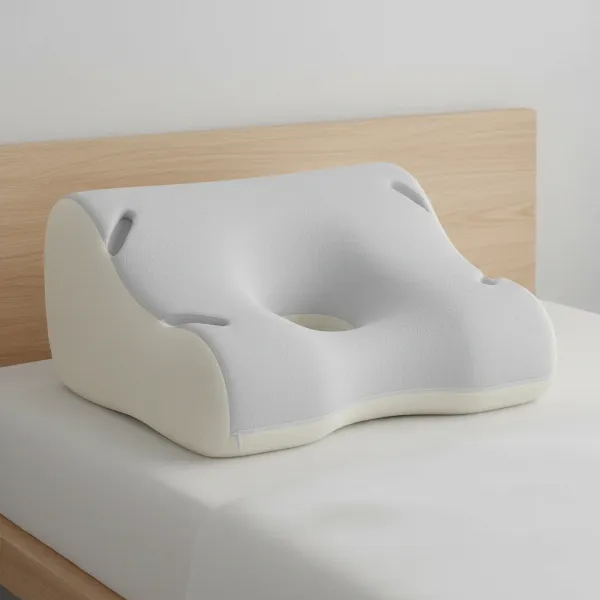 Close-up of a contoured CPAP pillow highlighting its unique cut-outs and ergonomic curves for masks.
Adjustable Loft CPAP Pillows
Loft refers to a pillow’s height, and for CPAP users, especially side sleepers, the right loft is critical for both comfort and mask accommodation.
- Features: These pillows often come with removable layers or inserts (like memory foam “leaves”) that allow you to customize the pillow’s height. This adaptability ensures you can find the perfect elevation to support your head and neck while also clearing your mask.
- Benefits: An adjustable pillow is a versatile choice, as it can be fine-tuned to your specific body type, mattress firmness, and mask size. Side sleepers generally require a higher loft to adequately fill the space between their head and shoulder, and adjustable pillows make it easy to achieve this optimal support, preventing neck strain and ensuring your airway remains open.
Cooling CPAP Pillows
Wearing a mask can sometimes lead to increased heat around the face, making sleep uncomfortable for hot sleepers. Cooling CPAP pillows are designed to combat this.
- Features: These pillows often incorporate materials like gel-infused memory foam, perforated foam layers for improved airflow, or specialized breathable covers (e.g., 3D mesh, phase-changing material).
- Benefits: By actively dissipating heat, cooling CPAP pillows help maintain a comfortable sleep temperature, reducing sweating and discomfort. This can be a game-changer for individuals who tend to sleep warm, contributing to more consistent and refreshing CPAP therapy.
Cervical Support CPAP Pillows
For side sleepers who also experience neck pain, pillows specifically designed with cervical support are invaluable.
- Features: These pillows prioritize ergonomic contours that align with the natural curvature of your spine. They are often firmer in crucial support areas and may have raised edges or a central depression to cradle the head and neck.
- Benefits: While all good CPAP pillows offer some level of support, those emphasizing cervical support specifically target neck and shoulder pain relief. They work to maintain a neutral spinal alignment, which is critical for alleviating chronic pain and preventing new aches, all while accommodating your CPAP mask.
Choosing Your Ideal CPAP Pillow: A Buying Guide
Selecting the perfect CPAP pillow involves considering several factors beyond just accommodating your mask. Tailoring your choice to your individual needs ensures maximum comfort and therapeutic effectiveness.
Sleeping Position
Your primary sleeping position is the most crucial factor.
- Side Sleepers: This article’s focus, side sleepers, need particular attention. Look for pillows that are generally taller and firmer to adequately fill the gap between your head, shoulder, and the mattress. Crucially, these pillows must have cutouts or curves on the sides to provide ample space for your CPAP mask and tubing. This design prevents the mask from being pushed into your face, causing leaks or discomfort, while maintaining proper spinal alignment at approximately a 30-degree angle.
- Back Sleepers: Typically benefit from flatter pillows with a curved indentation to support the neck’s natural curve.
- Stomach Sleepers: A thin, firm pillow is best for maintaining a neutral spine, though this position is often not recommended for overall spinal health. Adjustable pillows can be beneficial for combination sleepers.
Mask Type
Different CPAP masks require varying degrees of accommodation.
- Full-Face and Nasal Masks: These bulkier mask types often require pillows with deeper and more generous cutouts to prevent pressure points and ensure a stable seal.
- Nasal Pillow Masks: Being smaller and less intrusive, nasal pillow masks are generally more forgiving and tend to work well with most CPAP pillow designs.
- Always visualize how your specific mask will interact with the pillow’s contours and cutouts before purchasing.
Pillow Loft (Height)
The pillow’s height is essential for proper spinal alignment.
- For side sleepers, a higher loft is generally necessary to support the head and neck, keeping your airway open and aligned with your spine.
- Adjustable loft pillows are highly recommended as they allow you to fine-tune the height by adding or removing inserts, ensuring a personalized fit. This adjustability is particularly valuable as personal preferences can vary greatly.
Material & Firmness
The internal material of the pillow significantly impacts its support and feel.
- Memory Foam: This is a popular choice for CPAP pillows due to its ability to contour to your head and neck, providing excellent pressure relief while maintaining its shape. It supports the mask without “fighting” it or causing it to shift.
- Polyfoam and Latex: Other options include polyfoam, which can offer resilient support, and latex, known for its responsiveness and durability. However, latex can sometimes feel too bouncy or firm for some CPAP users.
- Firmness: Most CPAP pillows tend to be medium to firm. This level of firmness is crucial for providing stable cervical support and preventing the pillow from collapsing under the weight of your head and mask, which could lead to mask leaks or misalignment.
Temperature Regulation
Sleeping with a mask, especially a full-face one, can sometimes lead to feeling warm or overheating.
- Look for features such as gel-infused memory foam, perforated or ventilated foam cores, and breathable covers (e.g., mesh, Tencel, bamboo). These elements help dissipate heat and promote airflow, contributing to a cooler and more comfortable sleep environment.
Budget & Warranty
CPAP pillows are an investment in your sleep health and therapy adherence.
- Price: Most CPAP pillows range from $30 to $75, with luxury options costing more. While they are considered “non-essential” accessories and typically not covered by insurance, the benefits of a suitable pillow often outweigh the cost in terms of comfort and consistent therapy.
- Trial Periods and Warranties: Check if the manufacturer offers a sleep trial period or a warranty. This allows you to test the pillow’s suitability and protects your investment against defects.
Top Recommendations: CPAP Pillows for Side Sleepers with Masks
Choosing from the myriad of options can be daunting. Based on expert reviews and user feedback, here are some top CPAP pillow recommendations particularly beneficial for side sleepers wearing masks:
Borden Textile CPAP Pillow
Often highlighted as an excellent all-around choice, the Borden Textile CPAP Pillow is particularly well-suited for side sleepers. Its design incorporates ample cutouts on each side, providing dedicated space for your CPAP mask and tubing. This feature is crucial for preventing mask displacement and ensuring an uninterrupted seal, which is a common concern for active side sleepers. The pillow typically features a polyester fill, offering a plush yet supportive feel with medium firmness. Beyond mask accommodation, its shape also allows space for your shoulder, helping to maintain proper neck and head support and spinal alignment.
Contour CPAPmax 2.0 Pillow
The Contour CPAPmax 2.0 Pillow is a highly versatile option designed with the diverse needs of CPAP users in mind. It stands out for its adjustable loft, featuring removable layers of memory foam and polyfoam, allowing you to customize its height and firmness. For side sleepers, this means you can achieve the optimal loft to support your head and neck while accommodating your mask. The pillow boasts side cutouts and often includes a hose tether to manage tubing, preventing kinks and tugging. An additional cooling gel version is available, which incorporates a gel layer and breathable mesh cover, making it an excellent choice for those who sleep warm. Its medium-firm feel provides stable support.
Snugell CPAP Pillow for Side Sleeping
As its name suggests, the Snugell CPAP Pillow is specifically engineered for side sleepers undergoing CPAP therapy. It features a unique design with sloped surfaces and open corners that effectively create space for your CPAP hose and mask, ensuring they don’t get crimped or press into your face. This pillow offers adjustable loft through four included memory foam inserts, or “leaves.” Side sleepers can maximize these inserts to achieve the necessary cushioning and support to maintain spinal alignment. Its memory foam construction provides medium-firm support, cradling your head and neck while promoting steady airflow by protecting your mask.
Lunderg CPAP Pillow
Recognized for its structured support and thoughtful design, the Lunderg CPAP Pillow is another excellent choice for side sleepers. Constructed from dense memory foam, it slowly conforms to your shape, offering robust support and helping maintain correct sleep posture and spinal alignment. The pillow features cutouts strategically placed to allow ample room for your CPAP mask and tubing. An additional benefit is its adjustable height, thanks to a removable 1.5-inch foam base layer. Side sleepers can keep this layer in for maximum loft and support. The Lunderg pillow also often comes with two machine-washable pillowcases, adding convenience to its ergonomic benefits.
Maintaining Your CPAP Pillow: Cleaning and Care
Proper care of your CPAP pillow is essential to prolong its lifespan, maintain hygiene, and ensure continued support. Given that CPAP pillows are often made from specialized materials like memory foam, their cleaning requirements can differ from traditional pillows.
- Washing the Foam Core: Most memory foam or polyfoam CPAP pillows should not be machine washed or put in a dryer, as this can damage the material and alter its shape. Instead, spot clean small stains with a mild detergent and damp cloth. For a more thorough cleaning, the foam core can often be hand-washed in a bathtub with warm water and a small amount of mild soap. Gently squeeze out excess water without twisting or wringing the foam, then allow it to air dry completely in a well-ventilated area, away from direct sunlight. Ensure it is fully dry before re-covering it to prevent mold or mildew.
- Pillowcases and Covers: The most practical way to keep your CPAP pillow clean is by regularly using and washing a pillowcase. Many CPAP pillows come with a removable, machine-washable cover specifically designed to fit their unique contours and cutouts. If your pillow does not include a custom cover, an oversized, stretchy pillowcase made from a soft material like cotton jersey can be a good alternative, as it will adapt more easily to the pillow’s shape. Washing your pillowcase every week or two will significantly reduce the need for deep cleaning the pillow itself.
- Longevity: With proper care, a high-quality CPAP pillow can last several years. However, like any pillow, it will eventually lose its supportive properties. Replace your CPAP pillow when you notice it flattening, losing its shape, or no longer providing adequate support for your head, neck, and mask.
Conclusion
Navigating CPAP therapy as a side sleeper with a mask no longer means sacrificing comfort or sleep quality. By understanding the unique challenges and the specialized solutions offered by CPAP pillows, you can transform your nightly routine. The right pillow, with its thoughtful contours, adjustable loft, and supportive materials, can make a profound difference, ensuring your mask stays sealed, your spine remains aligned, and your sleep is truly restorative. Investing in a pillow designed to accommodate your specific needs is not just about comfort; it’s about optimizing your therapy and significantly improving your overall well-being. Are you ready to discover how the perfect CPAP pillow can unlock a new level of sleep comfort and effectiveness?
Frequently Asked Questions
Do CPAP pillows really help side sleepers with masks?
Absolutely. CPAP pillows are specifically designed with cutouts and contours to create space for your mask and tubing, preventing mask leaks, pressure points, and discomfort that often arise when side sleeping with a regular pillow. This specialized design helps maintain proper spinal alignment and enhances the effectiveness and comfort of your CPAP therapy.
What type of mask works best with CPAP pillows?
While most CPAP pillows are designed to accommodate various mask types, those with bulkier full-face or nasal masks often experience the most significant benefits from the deeper cutouts. Nasal pillow masks, being smaller, are more forgiving but still benefit from the stability and support a CPAP pillow provides.
How often should I replace my CPAP pillow?
Similar to regular pillows, CPAP pillows should generally be replaced every one to two years. However, this can vary depending on the material, quality, and how well it’s maintained. Replace it sooner if you notice it losing its shape, firmness, or ability to provide adequate support and mask accommodation.
Are CPAP pillows covered by insurance?
Typically, CPAP pillows are considered accessory items and are generally not covered by insurance providers. While this means an out-of-pocket expense, many users find the investment worthwhile due to the significant improvements in comfort, sleep quality, and therapy adherence.
Can I use a regular pillow if I’m a side sleeper with a CPAP mask?
While it’s possible to use a regular pillow, it’s often not ideal for side sleepers with CPAP masks. Regular pillows can push against your mask, causing air leaks, skin irritation, and discomfort. They also struggle to provide the necessary neck and spinal support, often leading to misalignment and pain. A dedicated CPAP pillow is highly recommended for a more effective and comfortable therapy experience.