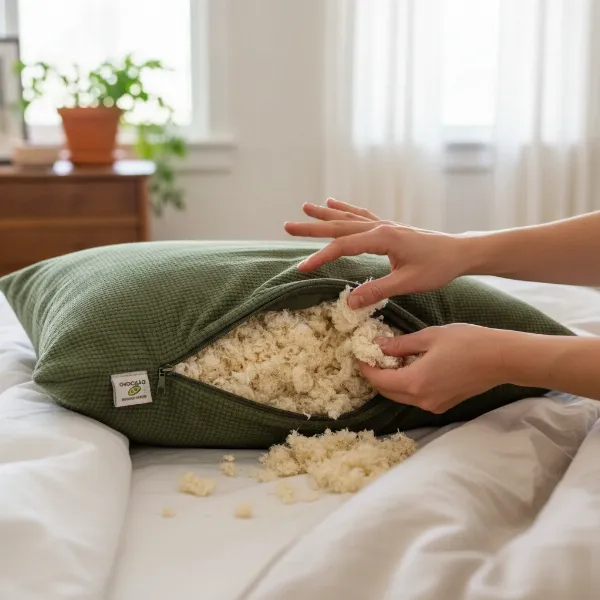
Waking up to a flat, lifeless pillow can ruin the start of your day and compromise your night’s rest. A flattened pillow offers insufficient support, leading to discomfort and potentially affecting your spinal alignment. With over a decade of experience in bed pillow reviews and understanding the nuances of a truly restorative sleep, I’ve seen firsthand the difference a properly maintained pillow can make. This guide will share essential techniques and insights to help you restore volume to your flat pillow, ensuring it provides the comfort and support you need for a deep, healthy sleep, and ultimately, your overall well-being.
The Secret Life of Your Pillow: Why Pillows Go Flat
Pillows don’t stay perpetually plump; their decline in volume is a natural process influenced by several factors. Primarily, the constant weight and pressure of your head night after night compress the filling, expelling air and causing the fibers or foam to clump together. Beyond physical pressure, moisture plays a significant role. Pillows absorb sweat, natural oils, and even humidity from the environment, which can weigh down the fill, making it denser and less resilient. Over time, accumulated dirt, dust mites, and dead skin cells also contribute to the breakdown of the filling and its loss of loft.
The speed at which a pillow flattens can vary greatly depending on its filling. Down and down alternative pillows, while initially soft and airy, are prone to compression and require frequent fluffing to maintain their loft. Shredded memory foam or latex pillows also benefit from regular agitation to prevent clumping. In contrast, solid memory foam, solid latex, and buckwheat pillows are more resilient to flattening due to their inherent structure, though they still benefit from periodic airing to refresh their feel.
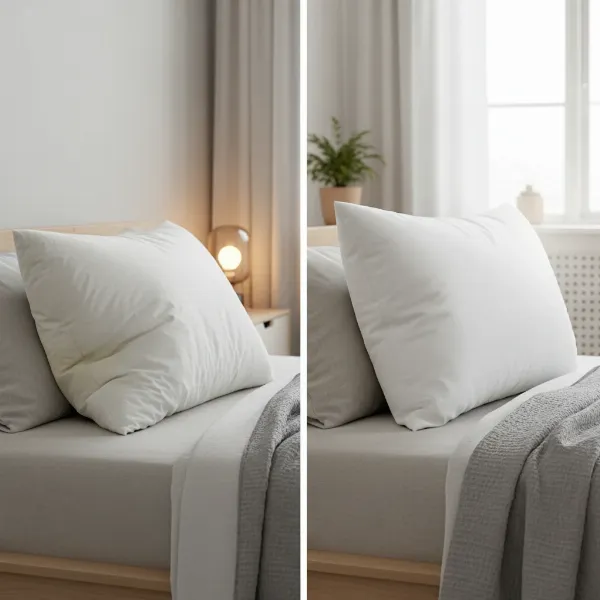 A comparison of a severely flattened pillow next to a new, fluffy pillow on a bed.
Why Fluffing Your Pillow Matters for Better Sleep
Fluffing your pillow is more than just an aesthetic touch for a well-made bed; it’s a vital practice for enhancing your sleep quality and promoting overall health. A properly fluffed pillow provides optimal comfort and crucial support, cradling your head and neck to maintain proper spinal alignment. This alignment helps alleviate common issues like neck and shoulder pain, which often arise when pillows lose their supportive structure.
Regular fluffing reintroduces air into the pillow’s filling, restoring its bounce and loft, making it feel fresh and inviting. This simple act can significantly extend the lifespan of your pillow by preventing the permanent compaction of its fill. Furthermore, a plump, well-maintained pillow contributes to a more appealing and luxurious bedroom environment, subtly improving your perception of comfort and relaxation before you even lie down.
Master the Art of Pillow Fluffing: Tried and True Methods
Restoring your pillow’s volume doesn’t require complex tools or techniques. There are several effective methods, ranging from quick hand techniques to more thorough dryer treatments and natural sun-and-air solutions.
By Hand: Quick Fixes for Daily Refresh
Manual fluffing is the most immediate way to revive your pillow and should ideally be done daily to maintain its loft.
- The Accordion Method: Hold your pillow by opposite short ends with both hands. Push and pull your hands together and apart, compressing and releasing the pillow as if playing an accordion. Rotate the pillow and repeat the action for an even fluff all around. This method is especially effective for down and feather pillows.
- The Massage Method: If your pillow feels lumpy, especially if it’s a down alternative or shredded foam type, target these areas. Use your fingers to knead and break apart any clumps, similar to kneading dough. Follow up with another fluffing method to redistribute the fill evenly.
- The Diagonal Clap: Grasp the pillow by its diagonal corners with each hand. Bring your hands together quickly, causing the pillow to “clap.” Be gentle; excessive force can further flatten the fill. Rotate and repeat this action on all diagonal corners.
- The Punch & Whack: For a firmer approach, use your fists to gently punch the pillow’s sides simultaneously, or whack it against a bed or clean, hard surface. This helps to redistribute compacted fill. Be lighter with feather pillows, as their material is very delicate.
|
Our Picks for the Best Bed pillows in 2026
As an Amazon Associate I earn from qualifying purchases.
|
||
| Num | Product | Action |
|---|---|---|
| 1 | Utopia Bedding Bed Pillows for Sleeping Queen Size (Black), Set of 2, Soft & Fluffy Pillow with Down Alternative Filling, Cooling, Hotel Quality, Gusseted Pillow for Back, Stomach or Side Sleepers |

|
| 2 | Beckham Hotel Collection Bed Pillows Standard/Queen Size Set of 2 - Original Soft Down Alternative Pillow for Sleeping - Soft Support for Back, Stomach or Side Sleepers |
|
| 3 | Utopia Bedding Bed Pillows for Sleeping Queen Size (Navy/White), Set of 2, Cooling Hotel Quality, Gusseted Pillow for Back, Stomach or Side Sleepers |
|
| 4 | Utopia Bedding Bed Pillows for Sleeping Queen Size (White), Set of 2, Soft & Fluffy Pillow with Down Alternative Filling, Cooling, Hotel Quality, Gusseted Pillow for Back, Stomach or Side Sleepers |
|
| 5 | Utopia Bedding Bed Pillows for Sleeping Queen Size (Blue), Set of 2, Soft & Fluffy Pillow with Down Alternative Filling, Cooling, Hotel Quality, Gusseted Pillow for Back, Stomach or Side Sleepers |
|
| 6 | Amazon Basics Down-Alternative Pillows for Stomach and Back Sleepers, Soft Density, 20 x 36 inches, 2-Pack, White |
|
| 7 | Goose Feather Down Pillow Queen Size Set of 2, Hotel Collection Bed Pillows for Sleeping, 2 Pack, Down Surrounded Soft Medium Firm Pillows for Side Back Sleepers 20 x 30 in. |
|
| 8 | Amazon Basics Down Alternative Pillows for Stomach and Back Sleepers, Soft Density, Standard, Pack of 2, White, 26 in L x 20 in W |
|
| 9 | Utopia Bedding Bed Pillows for Sleeping Queen Size (Grey), Set of 2, Soft & Fluffy Pillow with Down Alternative Filling, Cooling, Hotel Quality, Gusseted Pillow for Back, Stomach or Side Sleepers |
|
| 10 | Amazon Basics Down Alternative Pillow for Back Side Sleepers, Medium Density, Standard Size, 26" x 20", 2-Pack, White |
|
In the Dryer: A Deep Refresh
Using a dryer can provide a more thorough fluff, especially if your pillow has lost significant volume or feels damp. Always check your pillow’s care label first to ensure it is tumble-dryer safe and to note any specific temperature recommendations. Generally, a low heat setting is best.
- The Classic Dryer Fluff: Place one or two pillows in the dryer. If drying two, position them on opposite sides of the drum to maintain balance, which allows for proper spinning and even drying. Run on a low heat setting for about 20 minutes. Ensure the pillows are already mostly dry before this step to maximize fluffing rather than just drying.
- The Tennis Ball Trick: For an added boost of agitation and to help break up clumps, place one or two clean tennis balls (or specialized dryer balls) into tube socks and tie the ends. Toss these into the dryer with your pillows. The movement of the balls against the pillows helps to beat air back into the filling and distribute it evenly, restoring volume. This method works wonders for down, feather, and down alternative pillows.
- The Teddy Bear Method: If you don’t have tennis balls or dryer balls, a dry stuffed animal or a few clean towels can serve a similar purpose, providing gentle agitation to promote fluffiness.
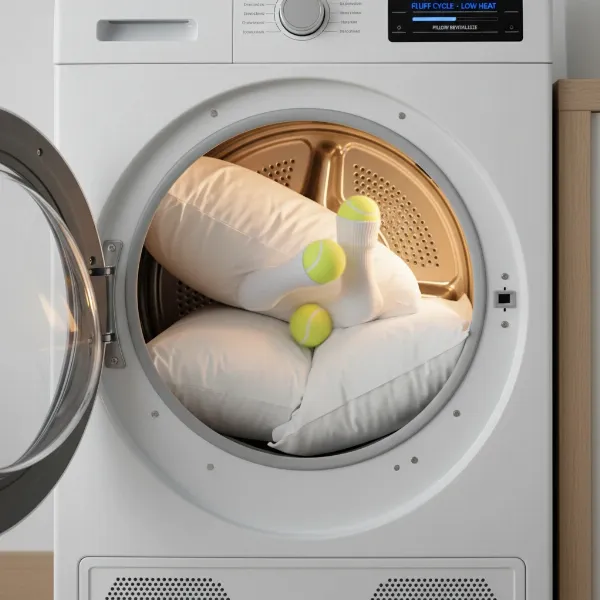 Two pillows and two tennis balls inside a clothes dryer during a fluffing cycle.
Harnessing Nature: Sun and Fresh Air
Sometimes, all your pillow needs is a breath of fresh air and a good dose of sunshine. This method is particularly beneficial for removing moisture and odors.
- The Sunbath Method: On a warm, dry, sunny day, remove your pillowcase and protector and lay your pillow outside in direct sunlight for 3-4 hours. The sun’s warmth helps dry out any absorbed moisture, which is a common cause of flatness, and its ultraviolet light can help kill bacteria and refresh the pillow. This method is excellent for all pillow types, including memory foam, which often requires air drying if spot cleaned.
- The Clothesline Hang: If you have a clothesline, hang your pillow to allow maximum airflow around all its surfaces. This natural aeration helps the fill expand and refreshes the pillow fibers, naturally restoring some of its lost volume.
Fluffing Different Pillow Types: Tailored Advice
While the general methods apply broadly, some pillow types respond better to specific techniques:
- Down and Feather Pillows: These are excellent candidates for both hand fluffing (especially the accordion method) and dryer fluffing with tennis balls, as their light, natural fill benefits greatly from agitation and redistribution.
- Synthetic/Down Alternative Pillows: Often prone to clumping, these pillows respond well to the massage method for breaking up lumps, followed by dryer fluffing with agitators to restore evenness and volume.
- Memory Foam Pillows (Shredded vs. Solid): Shredded memory foam can be fluffed by hand using massaging and gentle patting to redistribute the pieces. Solid memory foam pillows cannot be fluffed in the traditional sense; they should never go in a dryer. Instead, air them out in the sun to refresh and help evaporate any moisture.
- Buckwheat Pillows: These pillows are filled with hulls that don’t compress like fibers or foam. They don’t require fluffing, but periodically airing them out can keep them fresh.
How Often Should You Fluff Your Pillow?
For optimal comfort and support, aim to fluff your pillows daily. A quick hand fluff each morning can make a significant difference in maintaining their loft and extending their life. If you notice your pillow flattening throughout the day or night, or if it feels less supportive, a refresh is due. Incorporating a dryer fluff with tennis balls once a month, or an outdoor air-out every few months, can provide a deeper revitalization.
When It’s Time to Say Goodbye: Signs Your Pillow Needs Replacing
Despite your best fluffing efforts, pillows don’t last forever. Recognizing when to replace a pillow is crucial for your health and sleep quality.
- The Fold Test Failure: Fold your pillow in half. If it stays folded and doesn’t spring back to its original shape, its filling has broken down beyond repair. It’s time for a new one.
- Persistent Pain: Waking up with a stiff neck, shoulder pain, or tingling arms and hands is a strong indicator that your pillow is no longer providing adequate support, leading to spinal misalignment.
- Constant Readjusting: If you find yourself frequently punching, folding, or stacking pillows to get comfortable, your primary pillow has lost its ability to support you independently.
- Irreversible Flatness: If you’ve tried all fluffing methods, and your pillow still remains stubbornly flat and unsupportive, its useful life has ended.
- Unpleasant Odors or Stains: Persistent odors or significant stains that don’t wash out are signs of accumulated allergens, bacteria, or mildew, making the pillow unhygienic.
As a general guideline, most experts recommend replacing pillows every 1 to 2 years. However, this can vary by material; synthetic pillows often have a shorter lifespan, while high-quality latex or down pillows might last 3-5 years with proper care.
Conclusion
A restful night’s sleep is invaluable, and a fluffy, supportive pillow is a cornerstone of that experience. By understanding why pillows flatten and applying these simple yet effective fluffing techniques, you can significantly extend the life and enhance the performance of your bedding. Regular maintenance, whether it’s a daily hand fluff, a monthly dryer cycle, or an occasional sunbath, ensures your pillow consistently provides the cloud-like comfort and essential support your body needs. Don’t underestimate the power of a well-fluffed pillow to transform your sleep and contribute to a healthier, more energized you. What small change will you make today to give your pillows—and your sleep—the attention they deserve?
Frequently Asked Questions
Why do pillows flatten over time?
Pillows flatten primarily due to the constant pressure from your head, which compresses the filling and expels air. Moisture from sweat and oils, along with accumulated dirt and dead skin cells, also weigh down the fibers and contribute to a loss of loft.
Can all pillows be fluffed in the dryer?
No, not all pillows are suitable for dryer fluffing. Always check the care label on your pillow. Solid memory foam or latex pillows, for instance, should generally not be put in a dryer, as high heat can damage their material. Down, feather, and most synthetic fiber pillows typically respond well to low-heat dryer cycles with agitators.
How often should I replace my pillow?
It is generally recommended to replace your pillows every 1 to 2 years. This timeframe can vary depending on the pillow’s material and quality. Synthetic pillows may need replacing more frequently, while high-quality latex or down pillows might last longer with proper care.
What are dryer balls, and do I need them?
Dryer balls are typically made of wool, rubber, or plastic and are designed to agitate laundry in the dryer. When used with pillows, they help redistribute the filling, break up clumps, and introduce air, significantly boosting fluffiness. While not strictly necessary (tennis balls in socks can be a substitute), they are an effective tool for achieving maximum pillow volume.
Does fluffing a pillow actually make a difference?
Absolutely. Fluffing a pillow reintroduces air into the filling, restoring its loft and improving its support. This helps maintain proper spinal alignment, reduces neck and shoulder pain, enhances overall sleep comfort, extends the pillow’s lifespan, and makes your bed look more inviting.