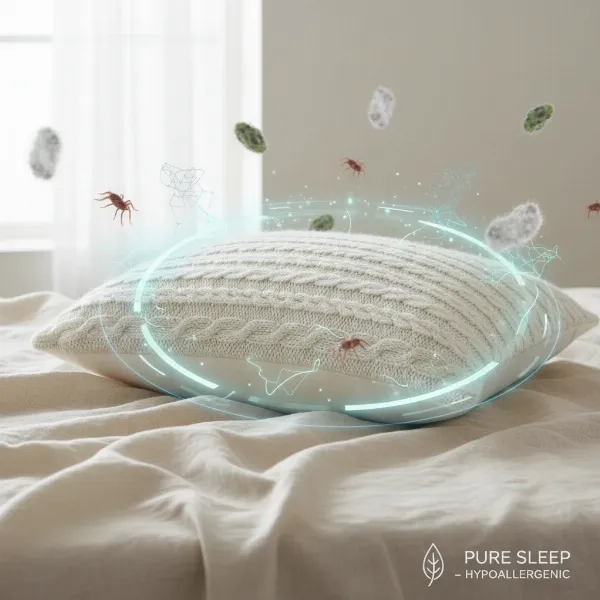
The quest for truly restorative sleep often begins with the foundation you rest upon—your mattress. In the realm of modern bedding, two materials stand out for their distinct characteristics and widespread popularity: latex and memory foam. Each offers a unique sleeping experience, catering to different preferences and needs. Understanding the fundamental differences between these materials is crucial to making an informed decision that will profoundly impact your comfort, health, and overall sleep quality.
Understanding the Popular Bed Materials: Latex and Memory Foam
Choosing the right mattress material is paramount for achieving optimal sleep quality and supporting your overall well-being. Both memory foam and latex have revolutionized the bedding industry, offering advanced support and comfort compared to traditional options. However, their core compositions and performance differ significantly, influencing everything from feel to longevity.
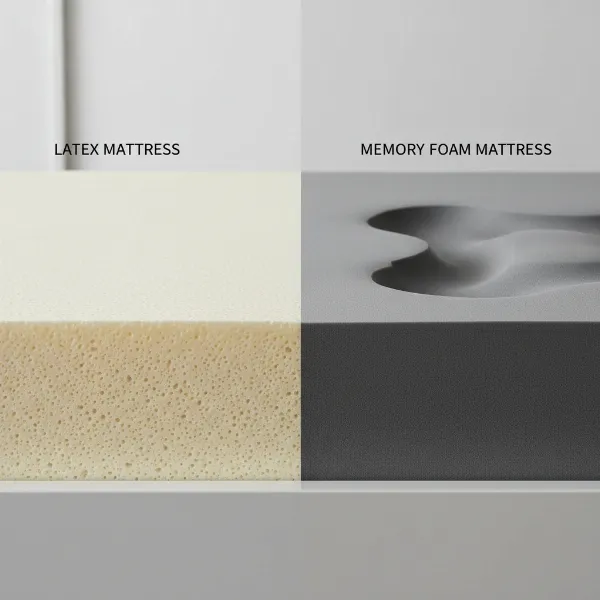 Visual comparison of latex and memory foam mattresses, highlighting distinct material properties.
Memory Foam
Memory foam, also known as viscoelastic foam, traces its origins to NASA, where it was developed for aircraft seats to improve crash protection. It’s a synthetic material made primarily from polyurethane, combined with various chemicals that give it its unique properties. This material is renowned for its ability to soften and conform to the body in response to heat and pressure, creating a distinctive “hug” or cradling sensation.
- Key Characteristics: Memory foam is celebrated for its deep contouring and excellent pressure relief. It molds precisely to your body’s curves, distributing weight evenly and alleviating pressure points, particularly around the hips and shoulders. A significant advantage is its superior motion isolation, meaning movements from a partner are less likely to disturb your sleep. However, its dense structure often leads to heat retention, and some users report a “stuck” feeling due to its slow response to pressure changes.
- Pros:
- Exceptional pressure relief and contouring support.
- Superior motion isolation, ideal for couples.
- Alleviates pain in sensitive areas by distributing weight.
- Offers a unique “sinking in” comfort.
- Cons:
- Can trap body heat, potentially leading to overheating.
- Slower response time, making it harder to change sleeping positions.
- May have an initial “off-gassing” chemical odor.
- Generally has a shorter lifespan compared to latex.
|
Our Picks for the Best Bed pillows in 2026
As an Amazon Associate I earn from qualifying purchases.
|
||
| Num | Product | Action |
|---|---|---|
| 1 | Utopia Bedding Bed Pillows for Sleeping Queen Size (Blue), Set of 2, Soft & Fluffy Pillow with Down Alternative Filling, Cooling, Hotel Quality, Gusseted Pillow for Back, Stomach or Side Sleepers |

|
| 2 | Utopia Bedding Bed Pillows for Sleeping Queen Size (Grey), Set of 2, Soft & Fluffy Pillow with Down Alternative Filling, Cooling, Hotel Quality, Gusseted Pillow for Back, Stomach or Side Sleepers |
|
| 3 | Utopia Bedding Bed Pillows for Sleeping Queen Size (Navy/White), Set of 2, Cooling Hotel Quality, Gusseted Pillow for Back, Stomach or Side Sleepers |
|
| 4 | Amazon Basics Down Alternative Pillow for Back Side Sleepers, Medium Density, Standard Size, 26" x 20", 2-Pack, White |
|
| 5 | Amazon Basics Down Alternative Pillows for Stomach and Back Sleepers, Soft Density, Standard, Pack of 2, White, 26 in L x 20 in W |
|
| 6 | Amazon Basics Down-Alternative Pillows for Stomach and Back Sleepers, Soft Density, 20 x 36 inches, 2-Pack, White |
|
| 7 | Beckham Hotel Collection Bed Pillows Standard/Queen Size Set of 2 - Original Soft Down Alternative Pillow for Sleeping - Soft Support for Back, Stomach or Side Sleepers |
|
| 8 | Utopia Bedding Bed Pillows for Sleeping Queen Size (Black), Set of 2, Soft & Fluffy Pillow with Down Alternative Filling, Cooling, Hotel Quality, Gusseted Pillow for Back, Stomach or Side Sleepers |
|
| 9 | Utopia Bedding Bed Pillows for Sleeping Queen Size (White), Set of 2, Soft & Fluffy Pillow with Down Alternative Filling, Cooling, Hotel Quality, Gusseted Pillow for Back, Stomach or Side Sleepers |
|
| 10 | Goose Feather Down Pillow Queen Size Set of 2, Hotel Collection Bed Pillows for Sleeping, 2 Pack, Down Surrounded Soft Medium Firm Pillows for Side Back Sleepers 20 x 30 in. |
|
Latex
Latex foam is derived from the sap of rubber trees (natural latex) or created synthetically from petrochemicals. Natural latex is highly valued for its eco-friendly credentials and sustainable sourcing. There are two primary processing methods for latex foam: Dunlop and Talalay. Dunlop latex tends to be denser and firmer, while Talalay latex is typically lighter, softer, and more buoyant.
- Key Characteristics: Unlike memory foam’s contouring hug, latex offers a more responsive and buoyant feel. It provides a “floating on top” sensation, quickly adapting to your movements and offering consistent support without deep sinkage. Its open-cell structure naturally allows for better airflow, making it a cooler sleep surface. Natural latex is also inherently hypoallergenic and resistant to dust mites and mold.
- Pros:
- Excellent breathability and temperature regulation.
- Highly durable with a longer lifespan (10-20+ years).
- Responsive and bouncy feel, easy to change positions.
- Natural latex is eco-friendly and hypoallergenic.
- Offers robust, consistent support.
- Cons:
- Typically has a higher upfront cost.
- Can be heavier and more difficult to move.
- May feel firmer for some sleepers.
- Less motion isolation than memory foam.
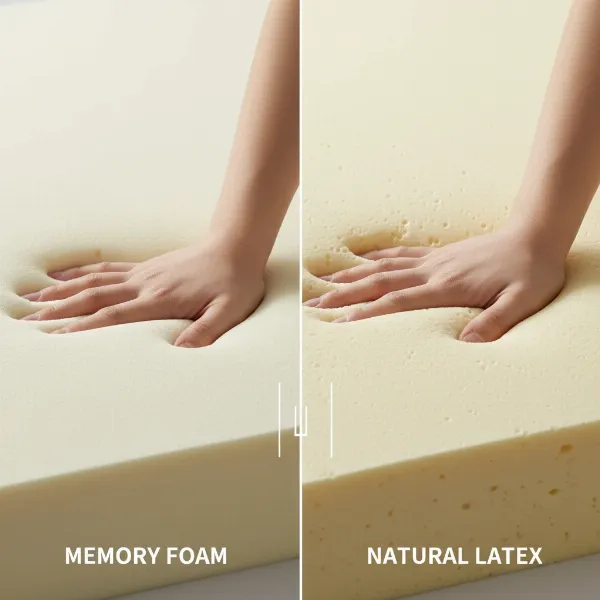 Close-up comparison of memory foam's conforming hug versus latex's buoyant support.
Comparison Table: Latex vs. Memory Foam
| Feature | Memory Foam | Latex |
|---|---|---|
| Material Origin | Synthetic (polyurethane) | Natural (rubber tree sap) or Synthetic |
| Feel | Sinking, cradling, body-conforming, “hug” | Buoyant, responsive, “on-top-of-the-bed” |
| Pressure Relief | Excellent, deep contouring | Good, subtle contouring, supportive |
| Motion Isolation | Superior | Good (less than memory foam) |
| Breathability | Tends to trap heat (unless cooling gels added) | Excellent, naturally breathable |
| Responsiveness | Slow to react, can feel “stuck” | Quick to react, bouncy, easy to move |
| Durability | 5-10 years | 10-20+ years |
| Price | Generally more affordable | Generally higher upfront cost |
| Off-gassing | Common initial chemical odor | Mild initial rubbery odor (natural latex), dissipates quickly |
| Weight | Lighter | Heavier |
Factors to Consider When Choosing Your Sleep Material
Selecting between latex and memory foam ultimately boils down to your individual needs, preferences, and sleeping habits. Consider these factors to guide your decision toward a material that promises optimal comfort and support.
Sleeping Position
Your preferred sleeping position plays a critical role in determining which material will offer the best support and alignment.
- Side Sleepers: Often benefit from the deep contouring and pressure relief of memory foam, which cushions hips and shoulders effectively. Softer Talalay latex can also be a good choice for pressure point relief.
- Back Sleepers: Both memory foam and latex can provide adequate support. Latex, with its ability to maintain spinal alignment, is often recommended, as is a medium-firm memory foam.
- Stomach Sleepers: Require a firmer surface to prevent the hips from sinking too deeply, which can strain the lower back. Denser Dunlop latex is often ideal for stomach sleepers, providing robust support.
- Combination Sleepers: Those who frequently change positions throughout the night tend to prefer the responsiveness of latex, which allows for easier movement compared to the “sinking” feeling of memory foam.
Temperature Sensitivity
For many, sleeping hot is a significant concern. If you tend to overheat at night, material breathability is a key consideration.
- Hot Sleepers: Latex is generally the preferred choice due to its natural open-cell structure that promotes airflow and dissipates heat effectively. While many modern memory foam mattresses incorporate cooling technologies like gel infusions or open-cell designs, natural latex inherently sleeps cooler.
Support and Firmness Preferences
The feel of your mattress dramatically impacts your comfort. Do you prefer a deep hug or a buoyant lift?
- Deep Hug/Cradling: Memory foam provides a unique “sink-in” sensation, conforming closely to your body for an enveloping feel.
- Buoyant Support: Latex offers a more “on-top-of-the-bed” feel, providing resilient support that prevents excessive sinkage and promotes easier movement.
Allergies and Environmental Concerns
For those with allergies or a desire for sustainable products, material composition is vital.
- Allergy Sufferers: Natural latex is inherently hypoallergenic, resistant to dust mites, mold, and mildew, making it an excellent choice.
- Eco-Conscious Consumers: Natural latex, derived from rubber tree sap, is a renewable resource and often processed with fewer chemicals than synthetic foams, appealing to those seeking an environmentally friendly option. Look for certifications like GOLS (Global Organic Latex Standard).
Budget and Longevity
The upfront cost and expected lifespan are practical considerations for any major purchase.
- Upfront Cost: Memory foam mattresses often come at a more accessible price point.
- Long-Term Value: While latex mattresses typically have a higher initial cost, their exceptional durability means they can last significantly longer—10 to 20 years or more—potentially offering better long-term value due to less frequent replacement.
Caring for Your Investment: Cleaning and Maintenance
Proper care and maintenance are essential for extending the life of both latex and memory foam products, whether they are mattresses or pillows. While the materials differ, many cleaning principles apply to both.
- Protective Covers: Always use a high-quality, breathable mattress protector or pillow cover. These washable covers create a barrier against spills, sweat, allergens, and dust mites, significantly simplifying maintenance.
- Spot Cleaning: For spills or stains, act quickly. Gently blot the area with a clean cloth dampened with a mild soap solution and cool water. Avoid harsh chemicals, bleach, or abrasive cleaners, as these can damage the foam’s integrity.
- Avoid Soaking: Neither memory foam nor latex should be fully saturated with water. Their dense structures can make drying extremely difficult, leading to mold or mildew growth. Hand-washing smaller items like pillows should be done carefully, ensuring minimal water exposure.
- Thorough Drying: After spot cleaning, allow the area to air dry completely. For mattresses, this might involve removing bedding and letting the surface air out for several hours. Ensure the item is fully dry before replacing covers or bedding to prevent moisture retention. Avoid using direct heat sources like blow dryers on hot settings or steam cleaners, as excessive heat can break down the foam.
- Regular Vacuuming: Periodically vacuum your mattress or pillow (without its cover) using an upholstery attachment. This helps remove dust, skin flakes, and other allergens that can accumulate over time.
- Ventilation: Whenever possible, air out your mattress by removing all bedding. This helps to dissipate any trapped moisture and odors. For latex mattresses, ensure your bed base allows for adequate airflow (e.g., a slatted foundation).
- Rotation: While memory foam mattresses typically do not need to be flipped, rotating your mattress 180 degrees every 6-12 months can help distribute wear evenly, promoting longevity.
Conclusion
The journey to an ideal night’s sleep is a personal one, and the choice between latex and memory foam hinges entirely on your unique preferences and priorities. Memory foam offers a distinctive cradling sensation, providing unparalleled pressure relief and motion isolation, making it a sanctuary for those who crave a deep hug and undisturbed rest. Conversely, latex provides a responsive, buoyant feel with superior breathability and exceptional durability, ideal for sleepers who prefer to float on their mattress and value a long-lasting, eco-friendly option.
Ultimately, neither material is inherently “better” than the other; they are simply different. By carefully considering factors such as your preferred sleeping position, temperature sensitivity, support needs, and budget, you can confidently determine which material will be your perfect sleep companion. What truly defines a great night’s sleep for you?
Frequently Asked Questions
Is latex or memory foam better for back pain?
Both latex and memory foam can be beneficial for back pain, but they address it differently. Memory foam excels at contouring to the body, relieving pressure points and supporting spinal alignment. Latex provides more buoyant and consistent support, which can be excellent for maintaining neutral spinal alignment, particularly for back and stomach sleepers. The best choice depends on whether you prefer a softer, conforming feel or a firmer, more responsive support.
Which mattress material is more durable?
Latex is generally considered more durable and long-lasting than memory foam. High-quality natural latex mattresses can last 15 to 20 years or even more, maintaining their shape and resilience over time. Memory foam mattresses typically have a lifespan of 5 to 10 years before they may start to show signs of sagging or reduced support.
Can latex and memory foam be combined in a mattress?
Yes, many modern mattresses are hybrids, combining layers of both latex and memory foam. This design aims to offer the best of both worlds: the pressure relief and motion isolation of memory foam with the responsiveness, breathability, and durability of latex. This can be an excellent option for those who enjoy aspects of both materials.
Do latex and memory foam mattresses have an odor?
Memory foam mattresses, especially when new, often have an initial “off-gassing” odor due to volatile organic compounds (VOCs) released from the synthetic materials. This smell typically dissipates within a few days or weeks. Natural latex may have a mild, rubbery scent initially, which is generally considered natural and dissipates much faster than memory foam off-gassing.
Which material is more eco-friendly?
Natural latex is generally considered the more eco-friendly option. It is derived from the sap of rubber trees, a renewable resource, and its processing typically involves fewer synthetic chemicals. Memory foam is a petroleum-based product, making it less environmentally sustainable, although many manufacturers are now producing CertiPUR-US certified foams that ensure lower VOC emissions and stricter environmental standards.