Waking up with a stiff neck or persistent shoulder pain can turn the promise of a restful night into a daily struggle. Often, the culprit isn’t a faulty mattress or poor sleeping habits alone, but rather an ill-suited pillow, particularly one with the wrong loft. As someone who has spent over a decade evaluating hundreds of bed pillows, I understand that selecting the ideal pillow loft—its height or thickness—is fundamental to achieving restorative sleep and maintaining overall spinal health. This guide will walk you through the essential factors, from your sleeping position and body type to mattress firmness, ensuring you choose a bed pillow that truly supports your unique needs.
Understanding Pillow Loft: What It Is and Why It Matters
Pillow loft refers to the uncompressed height of your bed pillow. While it might seem like a minor detail, this measurement plays a critical role in maintaining proper spinal alignment while you sleep. When your head and neck are supported at the correct height, your spine remains in a neutral, natural curve, reducing strain on muscles and ligaments. This alignment is crucial for preventing common issues like neck pain, headaches, and shoulder stiffness.
An improper pillow loft can throw your entire body out of whack. If your pillow is too high, your head can be pushed forward, leading to a strained neck and potentially compressed airways, which may even contribute to snoring. Conversely, a pillow that is too low causes your neck to sag, lacking adequate support and leading to misalignment and discomfort. The goal is a pillow that makes you feel like your head and neck are seamlessly integrated with the rest of your spine, allowing you to wake up refreshed and pain-free.
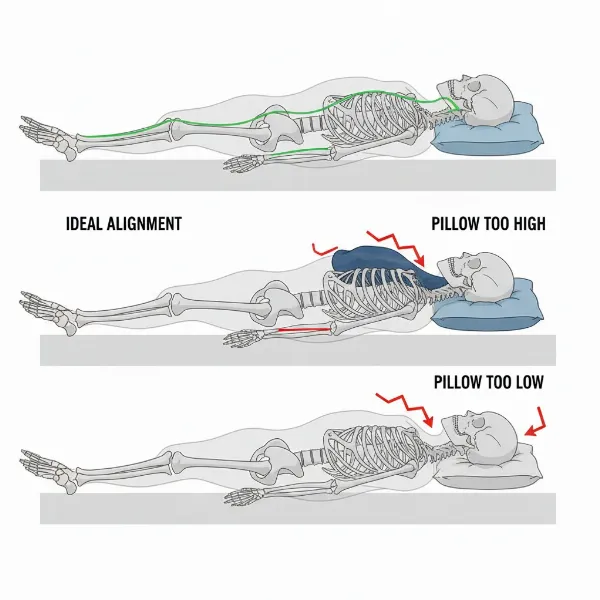 Diagram showing correct and incorrect pillow loft for spinal alignment and neck health.
Decoding Pillow Loft Categories
Pillow lofts are generally categorized into three main types, offering a starting point for your selection. Keep in mind that these are initial measurements, and the actual “effective loft” changes once your head rests on the pillow, depending on its material and firmness.
- Low Loft: These pillows typically measure less than 3 inches in height. They are designed for sleepers who need minimal elevation for their head and neck.
- Medium Loft: Falling in the range of 3 to 5 inches, medium loft pillows offer a balanced level of support. They are a versatile option for many sleepers, providing a gentle cradle for the neck.
- High Loft: Measuring over 5 inches, high loft bed pillows are the thickest. They are engineered to provide substantial elevation, filling larger gaps between the head, neck, and mattress.
It’s important to remember that a pillow’s initial appearance can be deceiving. A seemingly thick pillow might compress significantly under pressure, while a thinner-looking one made from dense material could maintain its elevation more effectively. The key is how the pillow performs once your head is resting on it, creating optimal alignment.
The Core Factors: Sleeping Position and Body Type
Your preferred sleeping position is arguably the most critical factor in determining your ideal bed pillow loft. Coupled with your body type, these elements directly influence the amount of space your pillow needs to fill to keep your spine neutral.
Side Sleepers: Bridging the Gap
|
Our Picks for the Best Bed pillows in 2026
As an Amazon Associate I earn from qualifying purchases.
|
||
| Num | Product | Action |
|---|---|---|
| 1 | Utopia Bedding Bed Pillows for Sleeping Queen Size (Navy/White), Set of 2, Cooling Hotel Quality, Gusseted Pillow for Back, Stomach or Side Sleepers |

|
| 2 | Utopia Bedding Bed Pillows for Sleeping Queen Size (White), Set of 2, Soft & Fluffy Pillow with Down Alternative Filling, Cooling, Hotel Quality, Gusseted Pillow for Back, Stomach or Side Sleepers |
|
| 3 | Utopia Bedding Bed Pillows for Sleeping Queen Size (Blue), Set of 2, Soft & Fluffy Pillow with Down Alternative Filling, Cooling, Hotel Quality, Gusseted Pillow for Back, Stomach or Side Sleepers |
|
| 4 | Amazon Basics Down Alternative Pillow for Back Side Sleepers, Medium Density, Standard Size, 26" x 20", 2-Pack, White |
|
| 5 | Goose Feather Down Pillow Queen Size Set of 2, Hotel Collection Bed Pillows for Sleeping, 2 Pack, Down Surrounded Soft Medium Firm Pillows for Side Back Sleepers 20 x 30 in. |
|
| 6 | Beckham Hotel Collection Bed Pillows Standard/Queen Size Set of 2 - Original Soft Down Alternative Pillow for Sleeping - Soft Support for Back, Stomach or Side Sleepers |
|
| 7 | Utopia Bedding Bed Pillows for Sleeping Queen Size (Grey), Set of 2, Soft & Fluffy Pillow with Down Alternative Filling, Cooling, Hotel Quality, Gusseted Pillow for Back, Stomach or Side Sleepers |
|
| 8 | Amazon Basics Down-Alternative Pillows for Stomach and Back Sleepers, Soft Density, 20 x 36 inches, 2-Pack, White |
|
| 9 | Amazon Basics Down Alternative Pillows for Stomach and Back Sleepers, Soft Density, Standard, Pack of 2, White, 26 in L x 20 in W |
|
| 10 | Utopia Bedding Bed Pillows for Sleeping Queen Size (Black), Set of 2, Soft & Fluffy Pillow with Down Alternative Filling, Cooling, Hotel Quality, Gusseted Pillow for Back, Stomach or Side Sleepers |
|
Side sleepers generally require a high loft pillow. When you lie on your side, there’s a significant gap between your head and the mattress, created by the width of your shoulders. A high loft pillow fills this space effectively, ensuring your head and neck remain aligned with your spine. Without sufficient loft, your head will tilt downwards, leading to neck strain and potential discomfort.
For taller individuals or those with broader shoulders, the need for a higher loft is even more pronounced. The greater the shoulder width, the larger the gap that needs to be supported. A pillow of around 5 to 7 inches in height is often recommended for side sleepers, but those with a larger frame might find comfort in pillows exceeding this range.
 Person sleeping on their side with a high-loft pillow providing excellent neck support.
Back Sleepers: Supporting the Natural Curve
Back sleepers typically benefit from a medium loft bed pillow. The goal here is to support the natural inward curve of your cervical spine (neck) without pushing your head too far forward or allowing it to fall back too much. A medium loft pillow cradles the neck gently, maintaining this natural alignment.
If the pillow is too high, your chin can be forced towards your chest, straining your neck. If it’s too low, your head might tilt backward, causing similar discomfort. A medium loft, often between 3 to 5 inches, provides the balanced support needed for comfortable back sleeping.
Stomach Sleepers: Minimalist Support
Stomach sleeping is generally considered the least ergonomic position for spinal alignment, as it often requires turning your head to one side for extended periods. For stomach sleepers, a low loft pillow, or even no pillow at all, is usually the best choice.
The aim is to keep your head as flat as possible relative to the mattress, preventing your neck from arching excessively backward. A pillow that is too high will push your head upwards, creating an unnatural curve and significant strain on your neck and upper back. Look for pillows less than 3 inches in height, or consider specially designed flat pillows.
Combination Sleepers: The Versatility Challenge
If you find yourself switching between multiple sleeping positions throughout the night, you are a combination sleeper. This style presents a unique challenge, as you need a bed pillow that can adapt to different loft requirements. Many combination sleepers find success with a medium loft pillow that offers a good balance of support for both back and side positions.
Alternatively, adjustable pillows are an excellent solution. These pillows allow you to add or remove fill to customize the loft and firmness, providing the versatility needed to accommodate your changing positions throughout the night.
Beyond Height and Position: Other Critical Considerations
While sleeping position and body type are paramount, several other factors can subtly yet significantly influence your ideal bed pillow loft. Considering these ensures a truly personalized choice.
Mattress Firmness: The Foundation
Your mattress firmness plays a crucial role in how your body sinks into bed, which, in turn, affects the effective pillow loft you need.
- Soft Mattresses: If you sleep on a soft mattress, your body will sink deeper into the surface. This means the gap between your head and the mattress might be reduced, so you might need a slightly lower loft pillow than you would on a firmer surface.
- Firm Mattresses: On a firm mattress, your body remains more on the surface, creating a larger gap between your head and the bed. Therefore, you might require a pillow with a higher loft to maintain proper alignment.
Always consider your entire sleep system—mattress and pillow—as they work together to support your spine.
Pillow Material and Firmness: Compression is Key
The material and firmness of your bed pillow significantly impact its compression under your head, directly affecting the effective loft.
- Memory Foam: Memory foam pillows conform closely to your head and neck, offering excellent pressure relief. Their firmness can vary, but denser memory foam tends to compress less, maintaining a consistent loft. Shredded memory foam allows for adjustability.
- Down and Down Alternative: These pillows are known for their softness and pliability. They compress easily, offering a plush feel. While comfortable, they might require a higher initial loft to compensate for significant compression, especially for side sleepers.
- Latex: Latex pillows are responsive and durable, offering a buoyant support that doesn’t compress as much as down. They come in various firmness levels and can maintain their shape well throughout the night.
- Buckwheat: Buckwheat hull pillows are highly adjustable and firm. You can easily add or remove hulls to achieve the exact loft and support you need, making them excellent for precise customization.
A firm bed pillow will generally retain more of its initial loft compared to a softer one of the same stated height.
Head Size and Weight
Though often overlooked, the size and weight of your head also influence how much your pillow compresses. A larger or heavier head will naturally exert more pressure on a pillow, causing it to flatten more significantly. This means individuals with larger heads might need a pillow with a slightly higher initial loft or a firmer material to provide adequate support once compressed.
Signs Your Pillow Loft is Wrong
Your body is excellent at signaling when something isn’t right. Pay attention to these common indicators that your current bed pillow loft isn’t serving you well:
- Neck Pain or Stiffness: The most obvious sign. Waking up with soreness or limited range of motion in your neck often points to misalignment during sleep.
- Shoulder Pain: Similar to neck pain, discomfort in your shoulders, especially on the side you sleep on, can indicate that your pillow isn’t adequately supporting your head and neck.
- Headaches: Tension headaches, particularly those starting at the base of your skull and radiating upwards, can be a symptom of poor neck posture.
- Restless Sleep or Tossing and Turning: If you find yourself constantly adjusting your pillow or changing positions to find comfort, your pillow might not be providing the consistent support you need.
- Increased Snoring: While various factors contribute to snoring, a pillow that is too high can compress your airways, potentially exacerbating or causing snoring.
Finding Your Perfect Loft: Practical Tips
The journey to finding your ideal bed pillow is a personal one, but a few practical strategies can guide you:
- Understand Your Primary Sleeping Position: Be honest about how you spend most of the night. This is your baseline.
- Consider Your Body Type: Take into account your shoulder width, height, and general build.
- Test in Person (If Possible): If buying in a store, lie down in your typical sleeping position for at least 5-10 minutes. Pay attention to how your neck and head feel. Does your spine feel straight?
- Observe Your Spinal Alignment: If you have a partner, ask them to observe your head, neck, and spine alignment while you lie on your pillow. Your spine should appear relatively straight, from your head down to your tailbone.
- Look for Adjustable Pillows: These are fantastic for fine-tuning your loft. Many come with removable layers or fill, allowing you to customize the height until it feels just right.
- Read Reviews: Look for feedback from users with similar body types and sleeping preferences.
Top Picks: Recommended Bed Pillows by Loft Need
While specific product names can vary, understanding the types of pillows best suited for different loft requirements will help you navigate the market.
- For High Loft (Side Sleepers, Broader Shoulders):
- Memory Foam Pillows: Often come in ergonomic shapes designed to fill the shoulder gap. Look for firmer, higher-density options.
- Solid Latex Pillows: Naturally buoyant and supportive, providing consistent high loft without much compression.
- Buckwheat Pillows: Highly customizable; you can fill them to your desired high loft and firmness.
- For Medium Loft (Back Sleepers, Combination Sleepers):
- Shredded Memory Foam Pillows: Offer adjustability to find that perfect mid-range loft.
- Down and Feather Blends: Can provide a comfortable medium loft with good moldability.
- Adjustable Layered Pillows: Pillows with removable layers allow for precise medium loft customization.
- For Low Loft (Stomach Sleepers, Petite Individuals):
- Soft Down or Down Alternative Pillows: Their high compressibility allows for a very low, flat profile.
- Thin Memory Foam Pillows: Specifically designed with a low profile to prevent neck hyperextension.
- Water Pillows (low fill): Allow for a very low loft by reducing the water content.
Caring for Your Pillow: Maintaining Loft and Hygiene
Even the perfect pillow won’t last forever without proper care. Regular maintenance is essential to preserve its loft, support, and hygiene.
- Fluff Regularly: Most pillows, especially those with compressible fills like down, feather, or shredded foam, benefit from daily fluffing. This helps redistribute the fill and restore some of the loft that might have compressed overnight.
- Wash According to Instructions: Always check the care label. Many pillows can be machine washed, but some delicate materials like solid memory foam require spot cleaning or professional care. Regular washing (every 3-6 months) removes allergens, dust mites, and oils that can weigh down the fill and reduce loft.
- Use a Pillow Protector: A good quality pillow protector acts as a barrier against sweat, oils, and allergens, extending the life and cleanliness of your pillow.
- Replace When Needed: Over time, all pillows lose their ability to provide adequate support. If your pillow feels lumpy, flat, or no longer springs back, it’s time for a replacement, typically every 1-2 years for synthetic pillows and 2-5 years for higher-quality materials like latex or memory foam.
Conclusion
Choosing the right bed pillow loft for your height is a personalized journey that significantly impacts your sleep quality and overall well-being. By understanding the interplay between your sleeping position, body type, mattress firmness, and pillow materials, you can make an informed decision. Remember that the ideal pillow perfectly aligns your head, neck, and spine, reducing strain and allowing for truly restorative sleep. Don’t settle for “good enough” when it comes to your sleep. Invest the time to find a pillow that supports your unique physiology. What changes will you make to your sleep setup tonight to wake up feeling more refreshed?
Frequently Asked Questions
What is the ideal pillow height for a side sleeper with broad shoulders?
Side sleepers with broad shoulders generally require a high loft bed pillow, typically 6-7 inches or more, to adequately fill the space between their head and the mattress. This ensures proper spinal alignment, preventing neck and shoulder strain.
Can my mattress firmness affect the pillow loft I need?
Absolutely. A softer mattress allows your body to sink deeper, potentially reducing the effective space your pillow needs to fill. Conversely, a firm mattress means you lie higher, often requiring a pillow with more loft for optimal head and neck support.
How do I know if my pillow is too high or too low?
Signs of an incorrect pillow loft include waking with neck pain, stiffness, or headaches. If your head is pushed forward, your pillow is likely too high. If your neck feels like it’s sagging backward, your pillow is probably too low.
Are adjustable bed pillows a good option for finding the right loft?
Yes, adjustable bed pillows are excellent for finding the perfect loft. They typically allow you to add or remove fill (like shredded memory foam or buckwheat hulls) to customize the pillow’s height and firmness, making them versatile for different sleeping positions and preferences.
What pillow materials offer the best loft retention?
Materials like solid memory foam and latex tend to offer excellent loft retention and consistent support over time compared to softer fills like down or down alternative, which may compress more and require more frequent fluffing.